The Auditor Is Gone. The Liability Isn't: What the LOGZONE Case Means for Every Federal Contractor
As I review the regulatory landscape heading into the latter half of 2026, a peculiar and dangerous delusion has taken hold across the Defense Industrial Base (DIB). When the Department of Defense announced its mid-July suspension of CMMC Phase II - halting the mandatory rollout of third-party C3PAO audits - a collective sigh of relief echoed across executive suites from Huntsville to San Diego.
Share this blog on:


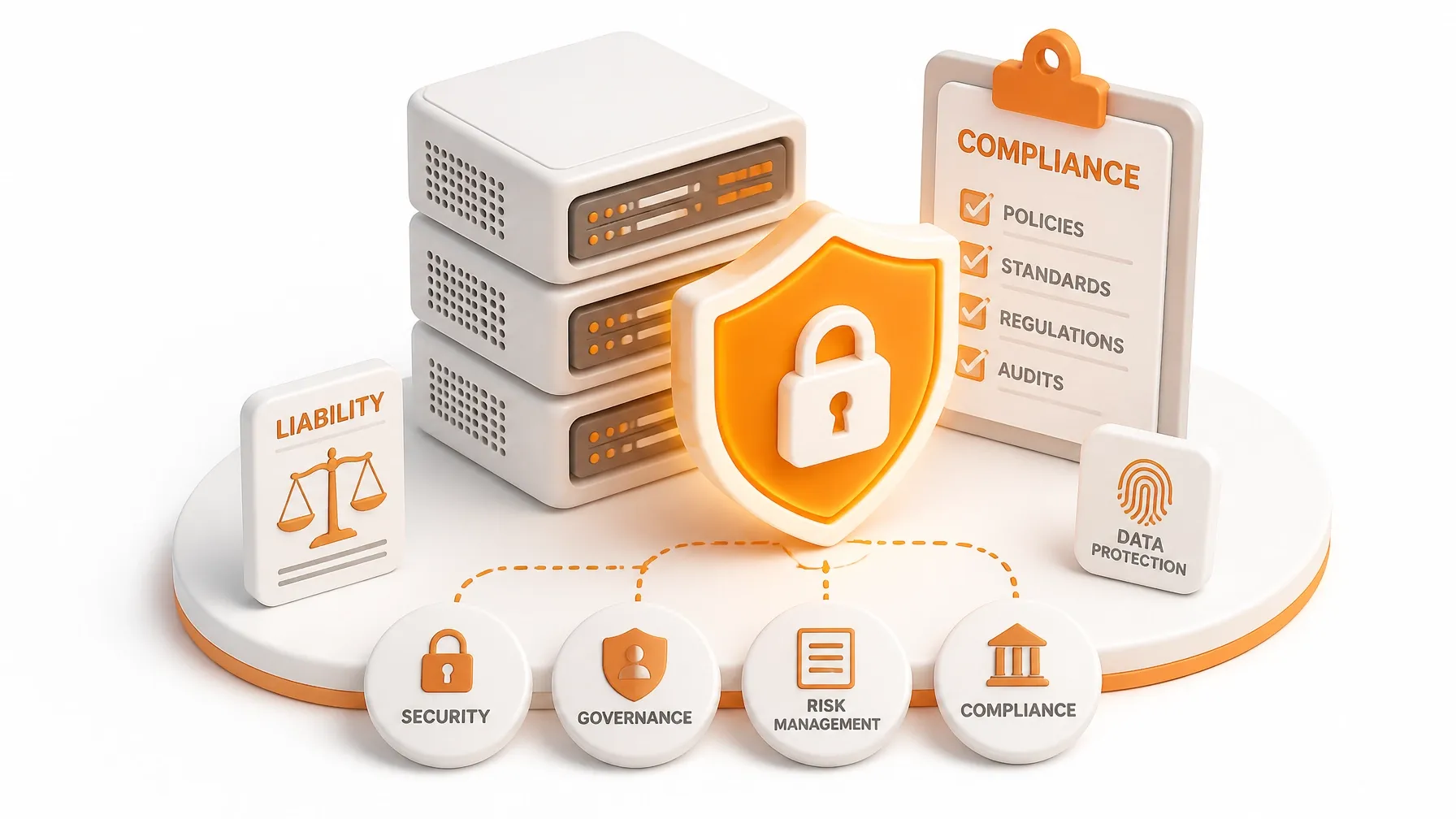
Contractors assumed the pressure valve had been released. They believed Washington had blinked, deciding that the administrative and financial burden of cybersecurity certification was simply too high.
That assumption is not merely incorrect; it is legally lethal.
To understand why, you need look no further than the Department of Justice’s June 18, 2026 settlement with LOGZONE Inc. This is the inaugural flagship analysis of our “Imposer” series at H&V Complynt Cybersecurity Solutions, and the core thesis can be stated without equivocation: The auditor is gone. The liability isn’t.
Let us examine what actually happened, why the regulatory pendulum is swinging harder toward civil fraud enforcement, and how federal contractors must fundamentally rethink their compliance architecture before the DOJ knocks on their door.
1. The LOGZONE Anatomy: 110 vs. -170 and the Price of Fiction
Let’s start with the facts of the LOGZONE case, because they read like a dark comedy of compliance hubris - until you look at the bottom line.
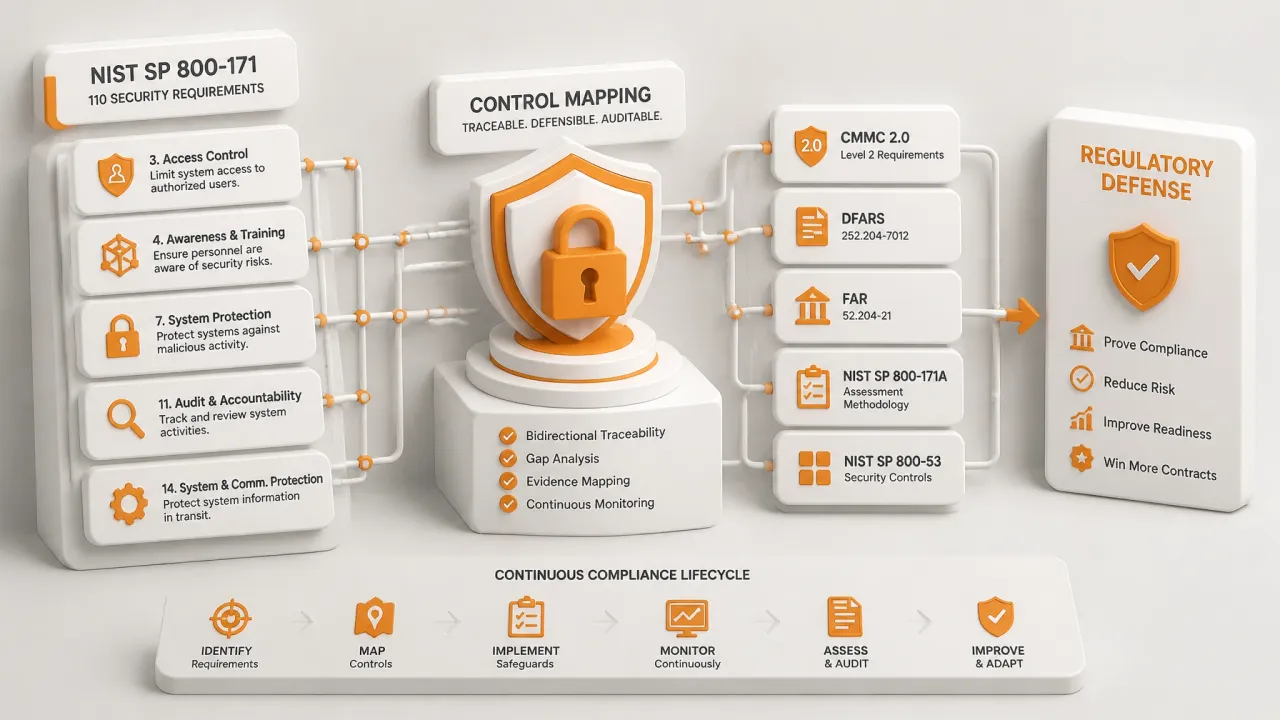
LOGZONE Inc., a defense contractor based in Huntsville, Alabama, held multiple U.S. Navy contracts governed by DFARS clauses 252.204-7012, 7019, and 7020. Under these clauses, contractors are contractually obligated to implement the security requirements of NIST SP 800-171 and to submit a self-assessment score into the Supplier Performance Risk System (SPRS).
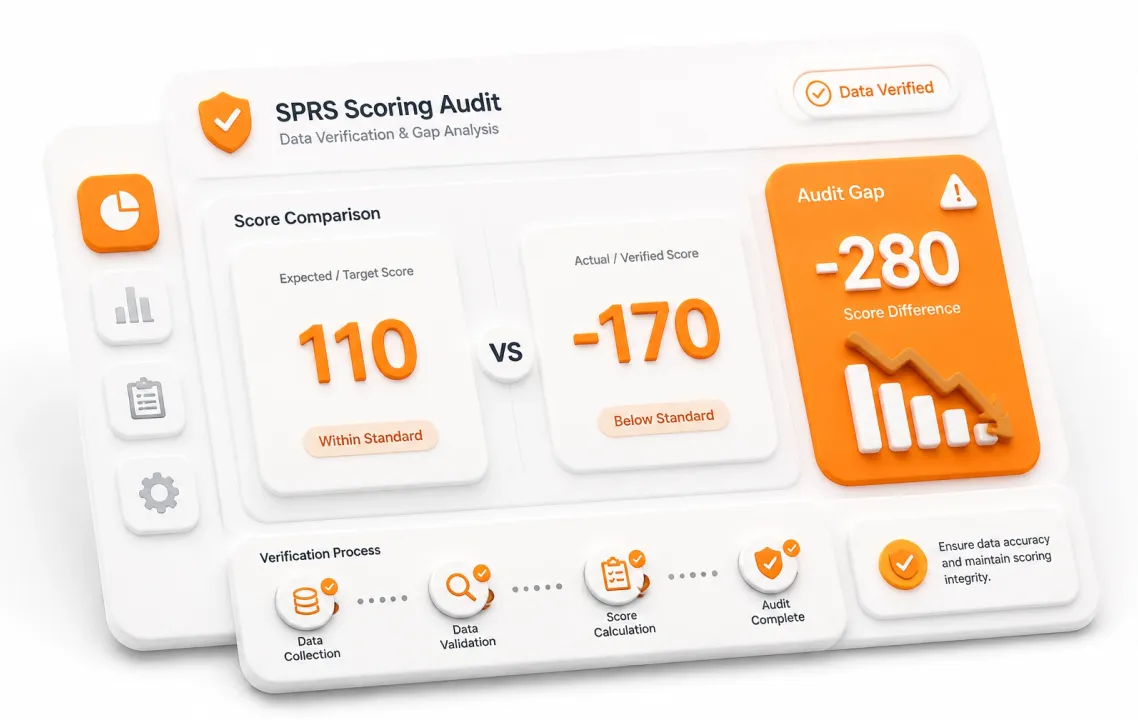
In October 2021, LOGZONE submitted its self-assessment. The score? 110.
For those familiar with the NIST SP 800-171 scoring methodology (which ranges from a maximum possible 110 down to a punishing -203), a score of 110 represents absolute perfection. It signifies that you have fully implemented all 110 security controls without a single point of deduction. It is the gold standard of self-certified compliance.
Then reality intervened. In February 2024, the Defense Industrial Base Cybersecurity Assessment Center (DIBCAC) conducted an independent, on-site technical assessment of LOGZONE’s facilities and security practices.
The DIBCAC score wasn’t a slight downward adjustment. It was -170.
A 280-point swing. A chasm so vast it defies mere administrative oversight or interpretive disagreement. It represents a total absence of implementation across critical security domains, paired with a completely fabricated self-assessment submitted into a federal database.
On June 18, 2026, LOGZONE agreed to pay $507,144 to resolve allegations under the False Claims Act (FCA). Notably, as legal analyses from firms like Mayer Brown and Crowell & Moring have pointed out, the settlement included no admission of liability. The company paid half a million dollars not because a data breach leaked classified weapons designs, but simply because the gap between what they claimed in SPRS and what they actually executed constituted a false claim for payment under federal law.
As Arnold & Porter analysts have repeatedly warned, the DOJ’s Civil Cyber-Fraud Initiative is not waiting for third-party CMMC audits to spin up. They are using DIBCAC spot-checks, whistleblower tips, and database forensics to prosecute contractors who treat cybersecurity questionnaires as mere paperwork exercises.
2. The CMMC Phase II Suspension: A Welcome Reprieve or a Dangerous Illusion?
To fully grasp the danger, we must connect the LOGZONE precedent to the shockwaves sent through the defense community on July 13, 2026.
As reported by Federal News Network, Pentagon Chief Information Officer Kirsten Davies issued a memo halting the implementation of CMMC Phase II - the planned rollout requiring third-party C3PAO assessments for contracts involving Controlled Unclassified Information (CUI) - and initiating a comprehensive 60-day review of the program.
For many contractors, this news was greeted as an indefinite holiday from cybersecurity governance. “No C3PAO audit? Great, we can put our remediation budget back into marketing.”
This is a catastrophic misreading of federal policy.
What the Pentagon suspended was the verification mechanism - specifically, the requirement for accredited third-party auditing organizations to certify compliance prior to award during Phase II rollouts. It did not suspend the underlying statutory and contractual obligations.
Federal contractors remain bound by DFARS 252.204-7012. You are still legally obligated to implement NIST SP 800-171 controls. You are still required to maintain an accurate SPRS score. And under the False Claims Act, submitting an invoice to the federal government while certifying compliance you do not possess remains a federal felony-level civil liability.
In short, the government has temporarily taken away the independent auditor. But by doing so, they have left enforcement entirely in the hands of the Department of Justice and opportunistic whistleblowers armed with the False Claims Act.
3. The Rise of the “Imposer” State: Compliance Through Liability
This brings us to the core conceptual framework of our analysis: The Imposer State.
Traditional regulatory compliance is built on a transactional model: the government establishes a standard, an authorized auditor inspects your facility, stamps your paperwork, and grants you a certificate. You pay your fee, receive your badge of approval, and operate with immunity until the next audit cycle.
That model is dead.
When the government realizes that the logistics of auditing tens of thousands of defense contractors with a limited pool of C3PAOs is functionally impossible, they don’t abandon security. They outsource the policing mechanism directly to the courts via civil litigation.
We call this compliance through liability.
Under the Civil Cyber-Fraud Initiative, the DOJ treats every invoice submitted under a contract containing cybersecurity clauses as a certification of compliance. If your actual posture does not match your SPRS score, every dollar paid under that contract is tainted. Whistleblowers - often disgruntled former IT employees, rival contractors, or internal compliance officers - stand to gain millions of dollars under the qui tam provisions of the False Claims Act by exposing these discrepancies.
You no longer need an auditor to find you non-compliant. You only need a plaintiff’s attorney who knows how to cross-reference your SPRS score with your actual system configuration.
4. Pillar 1 Deep Dive: FCA Liability as the Primary Driver
Why should the False Claims Act keep every chief executive and general counsel awake at night? Because the statutory mechanics are ruthless.
Under the FCA (31 U.S.C. § 3729 et seq.), liability attaches not just when a contractor commits intentional fraud, but when they act with reckless disregard or deliberate ignorance of the truth.
Consider what happened at LOGZONE. When an executive or system administrator logs into SPRS and clicks “Submit” on a score of 110 without conducting a rigorous, evidence-backed assessment of all 110 NIST SP 800-171 controls, they are not engaging in a minor administrative error. In the eyes of federal prosecutors, submitting an unsubstantiated max score is the textbook definition of reckless disregard.
Furthermore, the financial exposure extends far beyond a $507,000 settlement. FCA penalties include:
- Treble damages: Three times the total value of the government payments received under the tainted contracts.
- Statutory penalties: Punitive fines ranging from over $13,000 to more than $27,000 per false claim (i.e., per invoice submitted).
- Exclusion and Debarment: The ultimate corporate death penalty - being barred from bidding on future federal contracts entirely.
When you weigh these exposures against the cost of genuine compliance automation, the calculus shifts dramatically. Compliance is no longer an IT line item; it is existential corporate risk management.
5. Pillar 2 Deep Dive: How NIST 800-171 Rev 3 Controls Forge an Ironclad FCA Defense
If liability is the sword hanging over the DIB, what constitutes the shield?
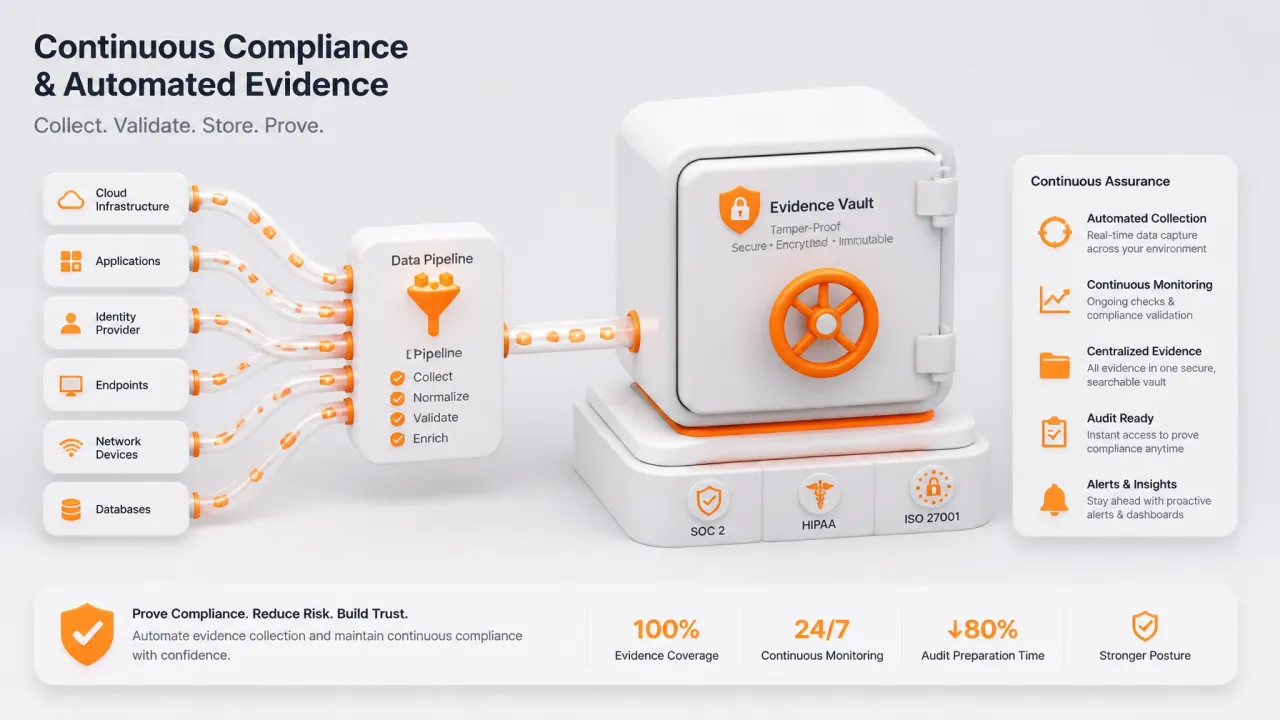
It is not a binder full of static, unread PDF policies sitting on a shared drive. It is a defensible, continuous compliance posture anchored directly to NIST SP 800-171 (and the incoming Rev 3 standards) backed by immutable audit trails.
When the DOJ or DIBCAC investigates a contractor, they do not ask for your opinion on your security; they ask for artifacts. They want to see:
- Continuous configuration management logs demonstrating that access controls are enforced.
- Automated vulnerability scanning reports showing remediation velocity.
- Policy-as-code implementations that prove security controls are operating as designed, 24/7/365.
This is precisely why hybrid compliance automation platforms like Complynt are redefining how federal contractors survive in this environment. By combining automated control mapping, real-time evidence collection, and continuous monitoring with expert strategic guidance, Complynt eliminates the dangerous gap between what you claim in SPRS and what is happening on your endpoints.
When every control is continuously mapped, verified, and backed by automated evidence collection, you don’t have to guess whether your score is 110 or -170. Your dashboard tells you the exact, defensible truth in real time. If the DOJ ever investigates, you hand them an immutable audit trail, not a frantic scramble of retroactive spreadsheets.
6. The Operational Imperative: What You Must Do Before the DOJ Knocks
The suspension of CMMC Phase II is not a signal to relax. It is a grace period - a brief, high-stakes window to audit your own house before someone else does it for you.
If you are a federal contractor, construction firm, or facility operator handling Controlled Unclassified Information, you must take four immediate steps:
Step 1: Conduct an Honest, Forensic SPRS Audit Immediately
Pull your current SPRS submission. Do not ask the IT manager who filled it out three years ago; ask for the physical artifacts and system security plans (SSPs) backing every single control. If you claimed a control is fully implemented, show the evidence. If there is a Plan of Action and Milestones (POA&M), ensure it is legally compliant and actively being burned down.
Step 2: Adopt Continuous Monitoring Over Point-in-Time Checklists
Compliance is a state of continuous operational reality, not an annual questionnaire. Implement tools that provide real-time visibility across your facility-related control systems (FRCS) and IT infrastructure.
Step 3: Embed Human Expertise with Automation
Software alone cannot interpret complex federal nuances, and human consultants alone cannot scale against modern data volumes. You need a hybrid model: automated control mapping paired with veteran regulatory strategists who understand federal contracting inside and out.
Step 4: Prepare for Whistleblower and DOJ Scrutiny
Assume that your competitors, your former employees, or federal investigators can scrutinize your compliance posture at any moment. Build your defense documentation today, while you control the timeline.
Conclusion: Securing Your Future in the Post-Audit Era
The LOGZONE case established a chilling precedent: the government does not need a data breach to penalize you; they only need a spreadsheet discrepancy. And with the CMMC Phase II audit program temporarily paused, the burden of enforcement has shifted squarely onto the shoulders of federal prosecutors wielding the False Claims Act.
The auditor may be gone, but the liability is heavier than ever.
In this new era, compliance is no longer about checking boxes to satisfy an inspector. It is about building an unassailable digital fortress where your claims match your reality down to the last log file.
At H&V Complynt Cybersecurity Solutions, we help federal contractors bridge that gap permanently - turning regulatory dread into operational confidence. Because when the liability is absolute, your compliance must be bulletproof.